
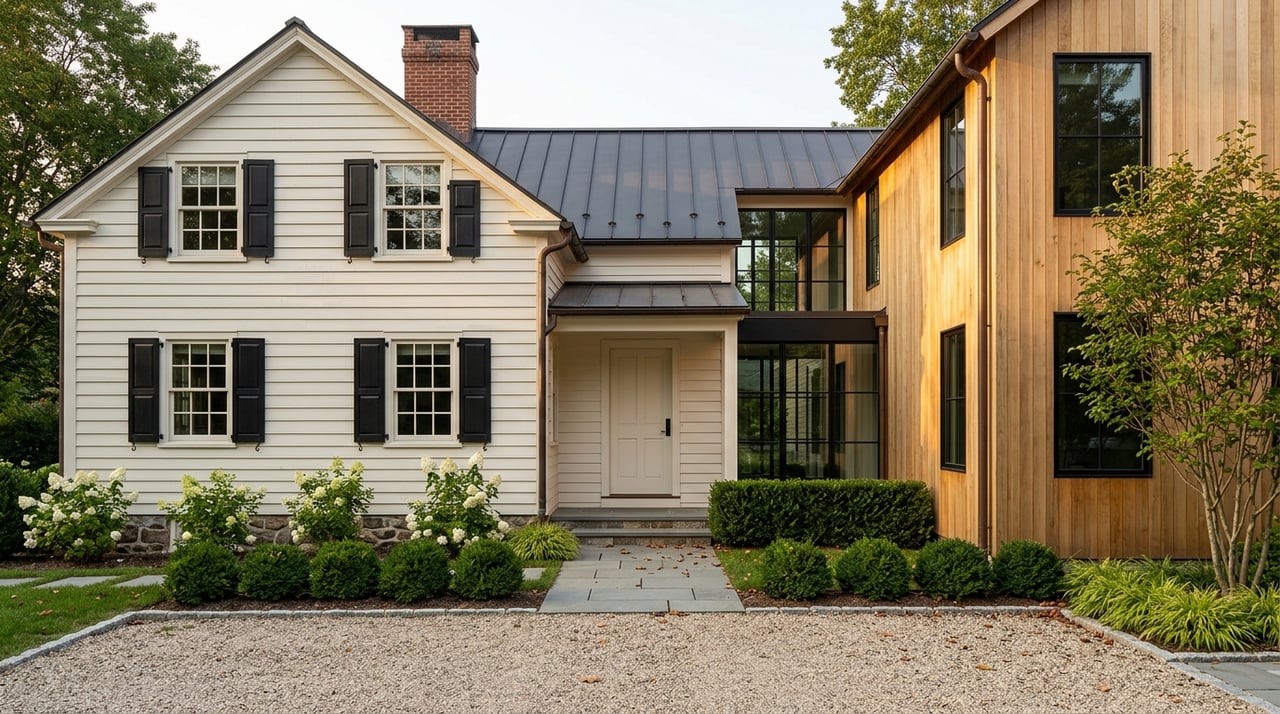
Wondering whether a historic home or a newer build is the better fit in Westport? It is a smart question, especially in a town where you can find homes dating back to the 1720s alongside newer custom construction designed for modern living. If you are weighing charm, upkeep, energy efficiency, and future flexibility, this guide will help you compare both paths with more confidence. Let’s dive in.
Why Westport Makes This Choice Unique
Westport is not a place where “old” simply means traditional styling. The town’s official history points to a real mix of colonial homesteads, Victorian-era structures, country estates, seaside cottages, and later suburban development, which gives the housing stock unusual depth and variety.
That matters when you start house hunting. In Westport, choosing between a historic home and a newer one is not just about aesthetics. It is often about how much stewardship, customization, and long-term planning you want to take on.
Westport is also a high-value, owner-occupied market. The U.S. Census Bureau reports a median value of owner-occupied housing units of $1,405,200 for 2020 to 2024, with an owner-occupied rate of 88.8%. In a market like this, the right choice usually comes down to lifestyle fit as much as price.
What Counts as a Historic Home in Westport
In Westport, historic homes often include colonial-era houses, farmhouses, and other prewar properties with original trim, proportions, and site patterns. These details can create a strong sense of place that is hard to replicate in newer construction.
Some areas of town include genuinely early housing stock. A Kings Highway North walking tour documents homes from the 1720s, 1730s, and mid-1800s, which shows that Westport’s historic inventory is not just inspired by the past. In many cases, it is the past.
That said, not every older home comes with the same review rules. A home’s age alone does not tell you whether future exterior changes will be regulated. That is why designation status matters so much when you evaluate a property.
The Appeal of Historic Homes
Historic homes can offer something that is difficult to manufacture: authenticity. Original materials, established site patterns, and architectural details often give these homes a feeling of permanence and character that many buyers find deeply appealing.
For some buyers, that charm is the point. You may value the idea of living in a home that reflects Westport’s long history and contributing to its care over time. If that sounds like you, a historic property can feel rewarding in a way a turnkey home may not.
There can also be financial upside in certain cases. Connecticut’s Historic Homes Rehabilitation Tax Credit offers 30% of qualifying rehabilitation expenses up to $30,000 for a primary residence listed on the State or National Register, either individually or as a contributing resource.
Westport also has a historic residential structure zoning incentive under Section 32-18. This can provide flexibility in exchange for a perpetual exterior preservation easement, which may be worth exploring if you are considering an eligible property.
The Trade-Offs of Older Homes
The biggest trade-off with a historic or older home is usually maintenance. Older homes often require more planning around systems, insulation, ventilation, and moisture control than homes built to current standards.
The U.S. Department of Energy notes that many older homes have less insulation than homes built today. Its guidance for existing homes focuses on a whole-house approach that includes energy audits, air sealing, insulation, moisture management, and ventilation.
That does not mean a historic home cannot perform well. It means you should go in with realistic expectations and a clear budget. If you prefer a home with fewer near-term repair variables, an older property may feel more involved than you want.
How Historic Review Works in Westport
One of the most important details to understand is whether the home is in a local historic district or is a locally designated historic property. In those cases, Westport reviews exterior work that is visible from a public street, place, or way.
According to the town, ordinary maintenance, repair, and replacement in kind generally do not require review. But replacement windows or doors, siding, additions, decks, garages, fences, outbuildings, new construction, and demolition that are visible from a public way typically do require review.
Westport is also clear that historic designation is about managing change, not freezing a home in place. The Historic District Commission supports compatible additions and restoration of original features, which can be reassuring if you love historic character but still want to make thoughtful updates.
It is equally important to know what does not trigger the same level of oversight. The town states that Historic Resources Inventory listing alone does not impose restrictions, and State Register-only listing does not require Historic District Commission review.
Why Buyers Choose Newer Homes
Newer homes appeal to buyers who want a cleaner maintenance baseline and more predictable near-term ownership costs. If your schedule is full or you simply want fewer age-related surprises, newer construction can offer peace of mind.
Energy performance is another big reason buyers lean toward newer homes. ENERGY STAR states that certified new homes are built better from the ground up and deliver better energy efficiency and performance than other homes, while ENERGY STAR NextGen homes are about 20% more efficient than typical code levels on average.
That efficiency advantage often starts with the design itself. In a newer home, insulation, air sealing, and mechanical systems can be planned from day one rather than added later through staged upgrades.
For many buyers coming from Manhattan or balancing a demanding schedule, that turnkey element matters. A newer custom build may offer the simplicity and predictability that make the move feel easier.
The Limits of “Turnkey” Freedom
A newer home is not always as unrestricted as buyers assume. If a property sits in a local historic district or is a locally designated historic property, even new exterior work visible from a public way can still require Historic District Commission approval.
That is why it is smart to separate two questions. First, is the home old or new? Second, what is the designation status of the property? In Westport, the second question can be just as important as the first.
Outside of those locally designated categories, newer homes usually offer more flexibility for future exterior changes. Still, it is worth confirming that status before you write an offer rather than discovering limits after closing.
How to Compare Your Real Priorities
The easiest way to decide is to focus on your tolerance for four things: stewardship, flexibility, efficiency, and regulatory complexity. Once you are honest about those four, the right path often becomes much clearer.
If you love craftsmanship, history, and the idea of improving a meaningful property over time, a historic home may be the right fit. If you want modern systems, lower near-term maintenance, and a more turnkey experience, a newer home may suit you better.
Neither option is automatically better for every buyer. In Westport, the better choice is usually the one that aligns with how you actually want to live, maintain, and invest in your home over the next several years.
A Practical Side-by-Side View
| Consideration | Historic Home | Newer Home |
|---|---|---|
| Character | Often includes original details, proportions, and strong sense of place | Typically cleaner lines and more modern layouts |
| Maintenance | Usually requires more deliberate planning for systems and envelope | Often offers more predictable near-term maintenance |
| Energy Efficiency | Can be improved, but upgrades may require a whole-building approach | Efficiency can be built into the design from the start |
| Exterior Changes | May require review if locally designated or in a local historic district | May still require review if in a local historic district |
| Buyer Experience | Best for buyers comfortable with stewardship and phased updates | Best for buyers seeking convenience and fewer age-related repairs |
What About Resale?
Resale is often more nuanced than buyers expect. A Connecticut study found no evidence that local historic district status reduced property values, and in three of four communities studied, district properties appreciated faster than the community overall.
At the same time, broader academic research on historic designation shows mixed results across different markets. In practice, that means age or designation alone does not determine resale performance.
In Westport, resale is often shaped more by condition, location, and how much future work the next owner is likely to face. A well-maintained historic home can be very appealing, just as a thoughtfully built newer home can be.
A Smart Buyer Checklist for Westport
Before you move forward on either type of property, it helps to ask a few targeted questions:
- Confirm whether the property is in a local historic district, is a locally designated historic property, is State Register only, or is listed only on the Historic Resources Inventory.
- Build a 5-year maintenance plan for an older home that considers the roof, windows, insulation, HVAC, drainage, and exterior trim.
- Ask whether any future exterior changes would require a Certificate of Appropriateness.
- Find out whether an eligible historic home could qualify for state rehabilitation tax credits or local preservation incentives.
- For new construction, ask whether the builder is pursuing ENERGY STAR certification or a similar efficiency standard.
These questions can save you time, money, and frustration. They also help you compare homes on practical terms rather than emotional first impressions alone.
The Best Choice Depends on You
In Westport, the choice between historic and new is rarely just about old versus new. It is more often about whether you value authenticity and preservation work more than turnkey convenience and modern efficiency.
If you are drawn to the story, texture, and architectural depth of an older home, Westport gives you real opportunities to own a property with genuine history. If you want a more predictable ownership experience and modern performance from the start, newer construction may feel like the better match.
The key is knowing what you are stepping into before you commit. With the right guidance, you can choose a home that fits both your taste and your tolerance for upkeep, future changes, and long-term planning.
If you are weighing historic charm against newer convenience in Westport, Kate Cacciatore can help you evaluate the trade-offs with clarity, discretion, and local insight.
FAQs
What makes a home historic in Westport?
- In Westport, historic homes often include colonial-era houses, farmhouses, and other prewar properties with original architectural details and site patterns, but the review rules depend on the property’s designation status, not just its age.
Do all older homes in Westport have remodeling restrictions?
- No. Westport states that Historic Resources Inventory listing alone does not impose restrictions, and State Register-only listing does not require Historic District Commission review.
What exterior work may need approval for a historic home in Westport?
- If a home is in a local historic district or is a locally designated historic property, exterior work visible from a public way such as replacement windows or doors, siding, additions, decks, garages, fences, outbuildings, new construction, and demolition may require review.
Are newer homes in Westport always easier to maintain?
- In general, newer homes offer a more predictable maintenance baseline because systems, insulation, and air sealing are planned into the design, but you should still verify build quality and efficiency standards.
Can historic homes in Westport be energy efficient?
- Yes. Older homes can be improved, but energy upgrades usually work best with a whole-house approach that addresses air sealing, insulation, moisture control, and ventilation.
Do historic homes in Westport hold their value?
- Research is mixed across markets, but a Connecticut study found no evidence that local historic district status reduced property values, which suggests resale depends more on condition, location, and future work than age alone.
What should buyers verify before making an offer on a Westport home?
- You should confirm the home’s historic designation status, ask whether future exterior changes need approval, review likely maintenance needs, and for new construction, check whether the builder is pursuing an efficiency standard such as ENERGY STAR certification.