
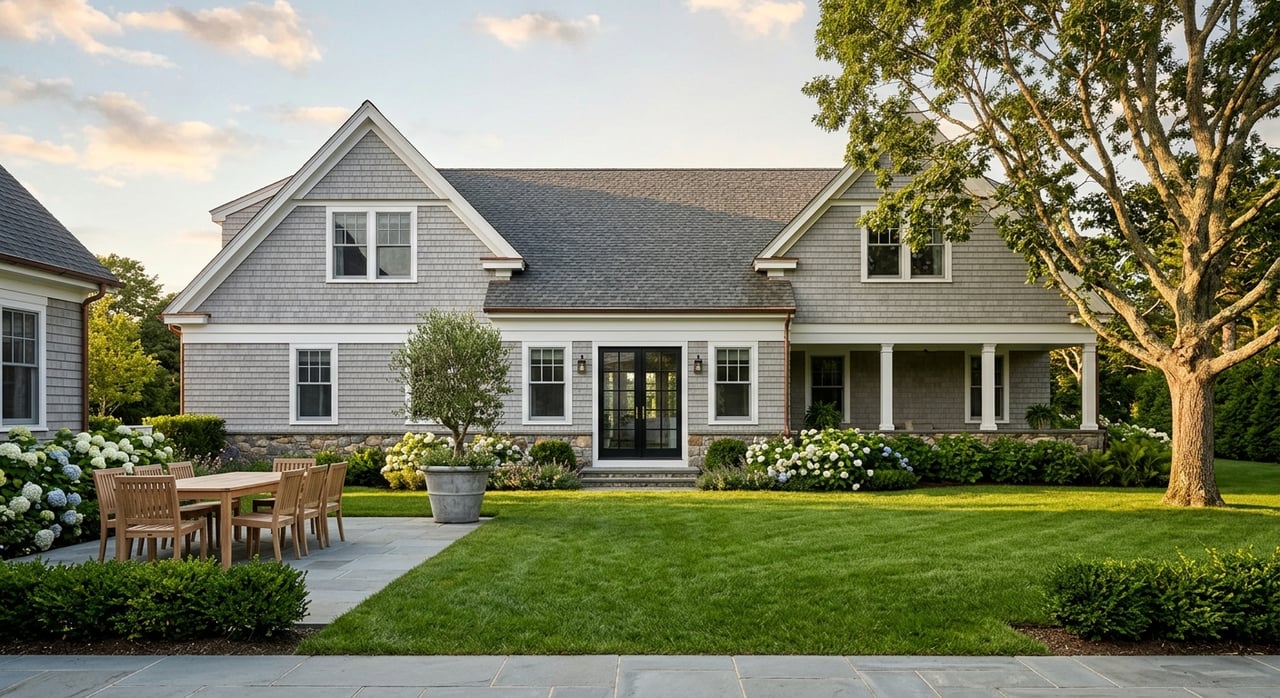
If you are trying to balance New York City access with a more coastal, residential daily rhythm, Darien likely lands on your shortlist for good reason. For many commuter households, the challenge is not just finding a town with a train station. It is finding a place where the logistics feel manageable and everyday life feels rewarding once you get home. This Darien lifestyle snapshot will walk you through what stands out about the town, from commuting and school routines to parks, beaches, and recreation. Let’s dive in.
Darien at a glance
Darien is a coastal town in Fairfield County that reads as distinctly residential in character. According to the town profile, it is mostly a suburban residential community with no industrial enterprises, which helps explain why the overall feel is quieter and more home-focused than commercial.
The town covers 23.4 square miles in total, including about 10.5 square miles of water. The U.S. Census Bureau’s 2024 estimate puts the population at 22,528, and 31.2% of residents are under 18. Taken together, those figures point to a smaller-scale shoreline suburb with a strong family presence.
The town also describes itself as a suburban community with an active town center and involved residents. For you as a buyer, that can translate into a place that feels established and functional without taking on the pace of a larger city center.
Why Darien works for NYC commuters
For NYC buyers, commute practicality is often the first filter. Darien is anchored by two Metro-North New Haven Line stations, which gives you more than one rail option within town.
The town describes the Darien Train Station as a major hub to and from New York City with frequent local and regional service. Noroton Heights is also described as a major hub, and the town notes that it offers ample commuter parking. That dual-station setup is a meaningful advantage if you want flexibility in your daily routine.
Parking matters too, especially when mornings are busy. Darien maintains railroad-station parking that includes daily commuter parking, and downtown municipal lots provide free short-term parking for shoppers. In real life, that kind of infrastructure can make routine errands and station access easier to manage.
A town sized for everyday living
One of Darien’s biggest strengths is scale. It does not read as sprawling or overly urban, which can matter if you are moving from Manhattan or Brooklyn and want a cleaner divide between work life and home life.
The town’s official descriptions point to a compact, center-oriented community. That means you are not only getting commuter access. You are also getting a place where schools, parks, train stations, and civic spaces appear to be part of a connected daily pattern.
For families, that often matters just as much as the commute itself. A town can look great on paper, but the real question is whether daily life feels organized and sustainable once school, work, and recreation all start competing for time.
School structure and family routines
If you are planning around children’s schedules, Darien offers a clear public school framework. Darien Public Schools lists one high school, one middle school, and five elementary schools: Hindley, Holmes, Ox Ridge, Royle, and Tokeneke.
The district also offers an Early Learning Program and an Idea Program for gifted students. That gives families a full K through 12 pathway within the district, along with multiple elementary school options depending on location and assignment.
Just as important for commuter households, school hours are staggered across grade levels. Darien High School opens at 7:40 a.m., Middlesex Middle School at 7:57 a.m., and elementary schools start between 8:25 a.m. and 9:00 a.m.
That staggered timing is worth noting if your household is coordinating train departures, drop-offs, and after-school pickups. It does not create a one-size-fits-all morning. Instead, it calls for planning, especially if you have children in multiple grades.
Outdoor life is part of the appeal
Darien’s park and beach system is not a side feature. It is one of the town’s clearest lifestyle advantages.
Official town pages say Darien has about 30 acres of shoreline beaches on Long Island Sound and 203 acres of ballfields and parkland, along with 11 parks and additional open-space properties. That amount of public outdoor space supports a lifestyle where time outside can be part of your weekly routine rather than a special occasion.
If you are coming from the city, that difference can feel significant. Access to beaches, walking paths, playgrounds, and open parkland can change how weekends, summer evenings, and even quick breaks between obligations look and feel.
Waterfront amenities in Darien
Weed Beach and Pear Tree Point Beach are the two best-known waterfront destinations in town. Each offers a different kind of shoreline experience, and together they help define Darien’s coastal identity.
Weed Beach includes tennis and paddle courts, a clubhouse, a playground, a picnic area, a seasonal concession stand, and a sandy swimming area. That mix gives it a practical, family-friendly feel with room for both active recreation and slower beach days.
Pear Tree Point Beach Park sits at the mouth of the Goodwives River and includes nearly eight acres with a boat launch, picnic grove, bathhouse, showers, restrooms, benches, and a concession stand. It is also home to the Darien Boat Club, which adds another layer to the town’s waterfront culture.
It is also useful to know that the beaches are managed seasonal amenities. The town’s 2026 beach rules show that Weed Beach and Pear Tree Point operate through permit and daily-pass access, which reflects a structured system rather than an open-access shoreline.
Parks for daily use
Not every great town amenity needs to be a destination. Darien also offers parks that fit more easily into an ordinary weekday.
Tilley Pond Park is near downtown and includes walking and jogging paths, benches, a garden area, trees, ornamental plantings, and nearby municipal parking. It is the kind of space that works for a quick walk, a stroller loop, or a low-key break between errands.
Cherry Lawn Park adds tennis courts, a baseball field, a community garden, and a playground. Together, these parks suggest that Darien supports both organized recreation and casual everyday use.
Recreation and club life
Beyond parks and beaches, Darien has a strong recreation layer that many buyers notice when comparing Fairfield County towns. That matters if you are looking for a home base that offers more than a commute and a backyard.
The Darien YMCA operates on Post Road and states that it is dedicated to youth development, healthy living, and social responsibility. For many households, a YMCA can become part of the weekly routine for fitness, programs, and year-round activity.
The Country Club of Darien lists golf, racquets, dining, a pool, and event space. The Darien Boat Club, founded in 1948, says it now serves more than 700 members and families with slips, launch service, and kayak and SUP storage.
Taken together, these options reinforce the sense that Darien supports a full lifestyle. You are not simply sleeping in the suburbs and commuting to the city. You are living in a town with multiple ways to spend time close to home.
What commuter families may notice first
When you step back, Darien’s appeal is not just one feature. It is the way several practical and lifestyle elements fit together.
For a commuter household, the two train stations matter. So do commuter parking options, a town center, structured school pathways, and staggered school start times that shape the morning routine.
For family life, the beaches, parks, ballfields, and recreation options add depth. Darien feels set up for households that want access to New York City while still prioritizing coastal open space, local routines, and a more residential setting.
Is Darien the right fit for your move?
If your goal is to find a Fairfield County town that combines commuter infrastructure with a strong everyday lifestyle, Darien deserves a close look. It offers a smaller-scale residential setting, two Metro-North stations, organized public amenities, and a shoreline identity that shapes daily life in a real way.
For buyers relocating from Manhattan or other parts of New York City, the key question is often how a town feels between the major moments. In Darien, the answer appears to center on routine, access, and a home-focused coastal environment.
If you are considering a move to Darien or comparing it with other Gold Coast towns, working with an advisor who understands both the local market and NYC buyer priorities can make the process more efficient and more strategic. To start a confidential conversation, connect with Kate Cacciatore.
FAQs
What is daily life like in Darien for NYC commuter families?
- Darien offers a mostly residential setting with two Metro-North stations, public parks, beaches, and a town-centered feel that can support both commuting and family routines.
What train options does Darien offer for New York City commuters?
- Darien has two Metro-North New Haven Line stations, Darien and Noroton Heights, and the town identifies both as major commuter hubs.
What public schools are in Darien, CT?
- Darien Public Schools includes one high school, one middle school, and five elementary schools: Hindley, Holmes, Ox Ridge, Royle, and Tokeneke.
What should families know about Darien school schedules?
- School start times are staggered by level, with Darien High School at 7:40 a.m., Middlesex Middle School at 7:57 a.m., and elementary schools beginning between 8:25 a.m. and 9:00 a.m.
What beaches and parks are available in Darien?
- Darien offers shoreline access at Weed Beach and Pear Tree Point Beach, plus parks such as Tilley Pond Park and Cherry Lawn Park for recreation and everyday outdoor use.
Are Darien beaches open year-round to everyone?
- Darien’s beach system is managed seasonally, and the town’s rules show that Weed Beach and Pear Tree Point use permit and daily-pass access.