
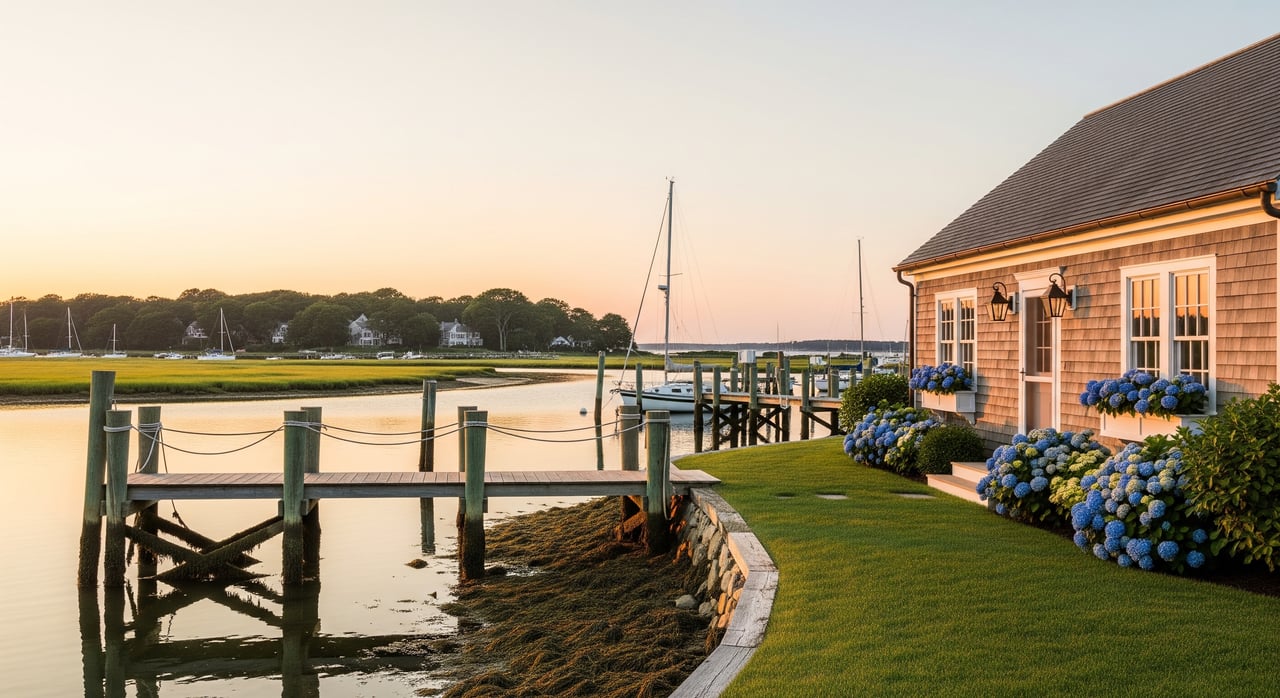
What if your everyday walk included harbor views, historic streets, and a quick stop at a favorite café? In Southport, that is a normal morning. You may be weighing a move from the city or exploring a change within Fairfield. Either way, you want a clear sense of daily life, housing, commute options, and the practical details that come with coastal living. This guide gives you an inside look at Southport Village and Harbor so you can decide with confidence. Let’s dive in.
Southport at a glance
Southport is a historic coastal village within the town of Fairfield, set along Long Island Sound. The heart of the area centers on a small harbor and a compact Main Street. Streets are narrow and walkable, with mature trees and classic New England façades.
The built environment feels human in scale. You will find sidewalks, small public spaces, and a mix of village shops and homes. Evenings and weekends tend to be quiet outside of peak seasons. Summer and early fall bring more activity as boaters and visitors arrive.
Daily life and conveniences
In the village core, you will find independent cafés, bakeries, restaurants, and small boutiques. There are galleries, antique shops, and lifestyle stores that curate their selections. Essential services exist, but the mix is limited within the village itself.
For larger errands or big-box retail, most residents drive to other parts of Fairfield or nearby towns. Local salons and professional offices round out the services. The result is a small-business atmosphere that feels personal and low key.
Dining and social life
Dining skews toward casual, sit-down spots with seafood and harbor influences. You can meet friends for coffee in the morning and return later for a relaxed dinner. Weekend evenings see more traffic, especially in the warmer months.
Social life often gathers around the harbor, village events, and private clubs. You will also see a steady rhythm of local talks and exhibitions hosted by nearby cultural groups. The pace shifts with the seasons, which keeps things interesting without feeling hectic.
Harbor and the outdoors
The harbor is the village focal point. Boating culture here is strong, with small private marinas, mooring fields, and space for kayaking and paddle sports. Waterfront walks are part of the routine for many residents.
You are close to beaches, coastal paths, and pocket parks. Community groups are active in stewardship and water quality efforts. Summer and fall are prime times for being on or near the water. Winter is calmer and turns inward to village routines.
Culture and seasons
Southport benefits from local historical organizations, small independent libraries, and preservation groups. These institutions host talks, exhibitions, and public programs that add texture to daily life. You can expect an uptick in events and visitors in warm months, then a cozy, resident-focused feel in winter.
Homes and architecture
Housing in Southport includes historic single-family homes from the Federal, Greek Revival, and Victorian eras, along with cottage-style properties and a smaller number of modernized residences. Parcels in the village are typically smaller than lots in more suburban parts of Fairfield.
Architectural preservation and the village’s historic character often shape how owners approach renovations. Exterior changes, additions, or demolitions may be guided by district rules, so it pays to plan ahead. If you value period details and classic streetscapes, this neighborhood delivers.
Market and value drivers
Southport is a premium submarket within Fairfield due to its village character, historic homes, and proximity to the water. Demand typically reflects that premium compared with town averages. Inventory and pricing shift with the seasons, so it helps to watch the market closely.
If you are buying, be ready to act on well-presented properties near the harbor or train. If you are selling, walkability, historic features, harbor proximity, and train access are consistent value drivers that resonate with buyers.
Commute and connectivity
Southport has a Metro-North station on the New Haven Line, with service to Stamford, Bridgeport, New Haven, and New York City via Grand Central. Trip times vary by local and express service, so check current timetables. If you plan to commute, confirm parking availability and think about peak-direction crowding.
By car, you can reach regional employment centers like Stamford or Norwalk in roughly 20 to 45 minutes depending on traffic and time of day. Many residents mix train and car travel based on schedule and season.
Coastal risk and resiliency
Waterfront living adds beauty and also responsibility. Parts of Southport face coastal flood risk, tidal inundation, and FEMA-designated flood zones. If you are considering a property near the water, review FEMA flood maps, local floodplain rules, and insurance needs, including National Flood Insurance Program options.
It is wise to ask for a property’s flood history and clarify elevation or mitigation work that may already be in place. Connecticut supports coastal resilience planning, and local groups sometimes share guidance for property-level risk reduction. These steps help you understand both cost and peace-of-mind factors.
Renovations, permits, and zoning
If you plan to renovate, confirm any historic district or preservation overlay requirements. Exterior changes, demolition, and additions can be subject to design review. The Fairfield Planning and Building departments can explain permit timelines and rules specific to Southport.
When you work within a historic setting, preparation is your best friend. Gather scope, timeline, and design details early. Owners often weigh energy updates and storm-hardening projects alongside aesthetic improvements.
Buyer checklist
Use this quick list to focus your search and due diligence:
- Define your lifestyle priorities. Walkability to Main Street, harbor access, and train proximity are common goals in Southport.
- Set commute expectations. Review train schedules from Southport station, and check station parking policies.
- Assess flood exposure. Check FEMA maps, ask for past flood history, and price out flood insurance with your agent.
- Confirm renovation scope. Speak with Fairfield Planning and any relevant historical boards before you finalize plans.
- Explore harbor access. Contact local marinas or the harbor master about mooring rules, waitlists, and seasonal options.
- Verify schools and services. Southport is served by the Fairfield Public Schools district. Confirm boundaries and program details directly with the district.
Seller checklist
If you are preparing a Southport property for market, consider these steps:
- Lead with place strengths. Highlight historic features, walkability to shops, harbor or water access, and proximity to the train station.
- Document resilience. Show recent mitigation work, utility elevation, or storm-proofing that reduces buyer uncertainty.
- Pre-market tune-up. Targeted repairs, light updates, and professional staging can help maximize first impressions.
- Clarify waterfront rights. If applicable, assemble records on moorings, docks, riparian rights, and any easements or restrictions.
- Prepare disclosures. Review state and local requirements, including any items related to flooding, seawalls, or environmental notes.
Is Southport a fit?
Choose Southport if you want a classic New England coastal village with real walkability, a vibrant harbor, and a calm daily rhythm. You will trade large-lot suburban sprawl for historic streets, small-scale shops, and close access to the water. The result is a lifestyle that blends charm, convenience, and a practical commute.
If you are ready to refine your search or prepare a sale, a trusted advisor can help you weigh timing, presentation, and due diligence from the start. Connect with Kate Cacciatore for boutique guidance, premium marketing, and data-informed strategy tailored to Southport.
FAQs
What defines Southport Village and Harbor in Fairfield, CT?
- A historic coastal village centered on a small harbor and Main Street, with walkable streets, preserved 18th–19th century architecture, and a small-business retail core.
How does the Southport commute to New York City work?
- Southport has a Metro-North station on the New Haven Line to Grand Central; trip times vary by local and express service, so review current timetables and station parking.
What types of homes are common in Southport Village?
- Historic single-family homes from Federal, Greek Revival, and Victorian eras, cottage-style houses, some modernized properties, and select waterfront homes with mooring access nearby.
Is flooding a concern near Southport Harbor?
- Parts of the village are in FEMA-designated flood zones; review maps, ask for a property’s flood history, and confirm insurance requirements and mitigation measures.
Are there rules for renovating historic homes in Southport?
- Yes. Historic districts or preservation overlays may guide exterior changes, demolition, and additions; check with Fairfield Planning and any relevant commissions early.
What should sellers highlight when listing in Southport?
- Emphasize historic features, walkability to village shops, harbor or water access, recent resiliency upgrades, and proximity to the train station.