
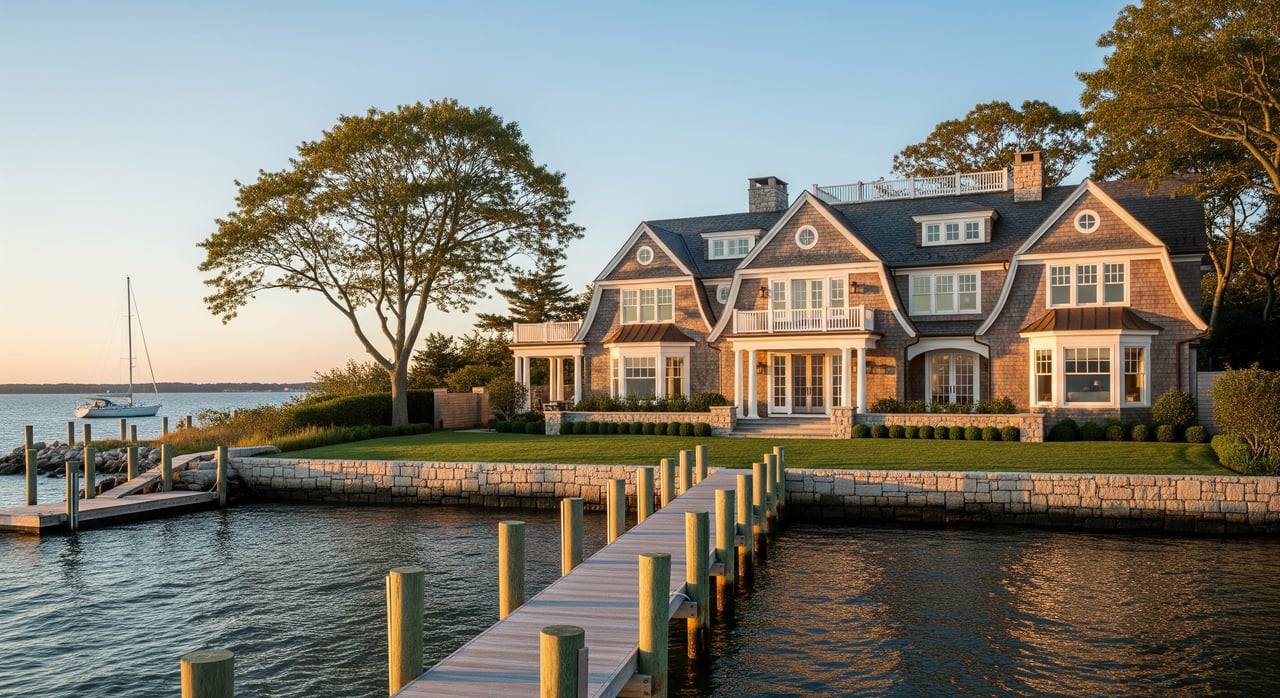
Not all “waterfront” is the same in Greenwich, and that difference can shift both lifestyle and value. If you are eyeing the coast from New York or preparing to list locally, clarity on what truly counts as waterfront helps you act with confidence. In this guide, you’ll learn how Greenwich defines waterfront vs. water view, the micro-areas and property types, what to know about docks and permits, and the features that influence price. Let’s dive in.
What “waterfront” means in Greenwich
When a listing says “waterfront,” you want to understand exactly what that includes.
- Waterfront: The legal lot boundary touches tidal water or the shoreline. Ownership usually carries some degree of littoral or riparian rights, which can include access and potential for a private dock, bulkhead, beach use, or a mooring, subject to permitting and title.
- Water view: The property overlooks the water but does not touch the shoreline and generally does not include shoreline access rights or docking privileges. Views can be stunning, yet legal access is different.
Common Greenwich shoreline types
- Sound frontage on Long Island Sound: The widest open views and most direct deep-water potential, with more exposure to waves, swell, and storm surge.
- Tidal inlets, harbors, coves, and river mouths: Calmer and more protected water that can be shallower and tide dependent, which may limit boat size or seasonality.
- Association-owned shoreline or common beaches: Access is controlled by an HOA or beach association. You may share facilities rather than hold exclusive littoral rights on a specific shore segment.
- Riparian riverfront and ponds: Freshwater or tidal river frontage with different navigability and regulatory considerations than Sound frontage.
Neighborhood micro-areas to know
Greenwich’s coast mixes open Sound exposure and protected harbors. Street-level conditions vary, but these local patterns are helpful starting points.
West End / Byram Shore
Westerly Greenwich near the Stamford border features smaller beaches and Sound frontage with a mix of cottages and substantial single-family homes. Expect some exposure to open water and a range of lot sizes. Dock potential and shoreline protections differ by site.
Cos Cob and Greenwich Harbor
This area includes harbors, marinas, and tidal channels that offer protected water. You will find a blend of historic homes and newer rebuilds, with practical boating access in calmer conditions. Depth and tidal windows matter for vessel size.
Riverside
Closer to the eastern side of Greenwich, Riverside has coves and some association beaches. Sheltered settings can simplify everyday boating. Rules and fees apply where shoreline is association controlled.
Old Greenwich
Eastern Greenwich pairs village amenities and commuter rail access with a range of frontage, from private Sound-front lots to association beaches. Proximity to public shoreline can influence privacy and traffic patterns.
Belle Haven and Indian Harbor
This enclave is known for private estates, many with association beaches, private docks, and direct harbor or Sound exposure. Waterfront rights, dock status, and shoreline infrastructure vary by property and deed.
Near Greenwich Point
Greenwich Point (Tod’s Point) is a town park with public shoreline that shapes nearby views and access dynamics. Properties around the park may benefit from scenery and beach lifestyle while balancing privacy and parking considerations.
Property types and trade-offs
Greenwich offers a spectrum of waterfront living, each with distinct pros and cons.
Large Sound-front estates
These homes often sit on substantial lots with bulkheads, private beaches, and full-size docks suitable for deep-water boats. You gain open views and direct access to the Sound. You also accept more exposure to storms and higher maintenance needs.
Harbor-front homes
On coves and harbors, homes benefit from protected moorings and easier docking. The trade-off can be depth limits and tidal timing, especially for larger vessels. Many buyers prefer the calmer everyday use of these settings.
Association condos and townhomes
You may enjoy shared shoreline or beach access at a lower individual infrastructure cost. Use and dockage are governed by HOA rules, fees, and availability. Waiting lists or vessel size limits can apply.
Smaller waterfront cottages
Older, modest homes on smaller lots appear in several coastal pockets. These can be renovation candidates or long-term replacements. Due diligence on existing shoreline structures is important before planning upgrades.
Key trade-offs at a glance
- Direct Sound frontage: Maximum views and deep-water access, with higher exposure and maintenance.
- Protected coves/harbors: Calmer waters and easier docking, with potential depth or tide constraints.
- Association shorelines: Shared access and lower individual upkeep, with less control and rule-based limits.
Docks, bulkheads, and permits
Shoreline improvements add lifestyle and value, yet they come with regulation and upkeep.
- Common structures: Bulkheads or seawalls, revetments, fixed piers and piles, floating docks, moorings and slips, and increasingly, living shorelines where suitable.
- Condition matters: The state of bulkheads, pilings, and permits influences pricing, lending, and insurance. Maintenance and eventual replacement should be part of your plan.
Who regulates what
- Connecticut DEEP oversees tidal wetlands, coastal construction, and many in-water structures.
- U.S. Army Corps of Engineers may require federal permits for work in navigable waters or projects with dredge or fill.
- Town of Greenwich reviews local zoning, building permits, harbor use, and moorings through building, land-use, conservation, and harbormaster offices.
- FEMA/NFIP floodplain rules and elevation standards can affect improvements and insurance.
- HOAs and private covenants may restrict docks, set use rules, or define who can access common beaches.
Design, timing, and costs
Shoreline projects often require surveys with tidal data, structural design, and sometimes ecological studies. Seasonal work windows can apply to protect marine species. Expect lead times for engineering and permit review, and plan for ongoing maintenance over the life of the structure.
What drives value on the water
Several factors shape pricing and desirability on the Greenwich coast.
- Type of frontage: Direct Sound frontage usually commands the highest premiums for views and access, while sheltered harbors are prized for practical boating.
- Water depth and navigability: Deeper water and unobstructed channels are critical for larger boats.
- Linear shoreline and beach quality: More frontage and a usable beach add value. Sandy and gently sloped areas often increase day-to-day enjoyment.
- Dock or berth rights: An existing, permitted dock or private mooring is a major amenity. Condition and permitability are key.
- Elevation and flood risk: Higher sites outside flood V zones are attractive for lower insurance and storm exposure.
- Privacy and exposure: Proximity to public beaches and density next door can affect privacy.
- Association rules and fees: Shared access with governance and assessments affects use and carrying costs.
- Access and commute: Convenience to downtown, train stations, and services is important for many NYC buyers.
Secondary financial factors
- Liquidity: Waterfront is coveted but niche. Unique estates or unusual shorelines can have longer market times.
- Insurance and operating costs: Flood insurance, homeowners and marine coverage, and shoreline upkeep impact returns.
- Regulatory and future limits: Coastal regulation changes and sea-level rise can affect future approvals for repairs or expansions.
Due diligence checklist for buyers
Use this list to streamline decisions and protect value.
- Title review for littoral or riparian rights, easements, and covenants.
- As-built and boundary surveys showing the mean high-water line and setbacks.
- Copies of permits for docks, bulkheads, and recent shoreline work.
- Condition assessments for bulkheads, pilings, and docks by qualified professionals.
- FEMA flood zone determination, current flood maps, and insurance estimates.
- Bathymetry or depth checks for your boat size and harbormaster availability for moorings.
- HOA rules, fees, and reserve studies if shoreline is association controlled.
- History of erosion, storm damage, and repairs.
- Utility and sewer status, since some coastal lots differ in hookups.
For sellers, assemble the same documents ahead of listing and highlight transferable rights such as permitted docks, slips, or moorings to reduce buyer friction.
Resilience and planning on the coast
Long Island Sound experiences tidal variability, storm surge, and projected sea-level rise. These factors influence shoreline stability, insurance, and future permitting. Hard protections like bulkheads can safeguard uplands but may increase nearshore erosion, while living shorelines are gaining traction where appropriate. Monitor town and state planning updates, since coastal resiliency guidance can shape how and when work is approved.
Moving forward
If you are considering a Greenwich waterfront move, clarity on rights, structures, and risk helps you move quickly and avoid surprises. A seasoned local advisor can coordinate surveys, permits, marketing, and negotiations while keeping the process discreet and efficient.
For tailored guidance on buying or selling on the water, connect with Kate Cacciatore. Kate pairs analytical pricing with white-glove service, premium presentation, and trusted vendor coordination to deliver calm, high-value outcomes.
FAQs
What rights come with a Greenwich waterfront deed?
- Littoral or riparian rights vary by deed and local law, so you should review title and recorded easements to confirm access, dock potential, and shoreline boundaries.
Can I build or replace a dock in Greenwich?
- Most docks and in-water structures require review by the Town of Greenwich, Connecticut DEEP, and possibly the U.S. Army Corps of Engineers, along with compliance with floodplain rules.
How does Sound frontage compare to harbor frontage for boating?
- Sound frontage offers open views and direct deep-water access, while harbors provide calmer, protected waters that can be shallower or tide dependent for larger vessels.
How will flood insurance affect a waterfront purchase?
- Your FEMA flood zone and elevation will drive insurance requirements and premiums, and lenders often require formal determinations for mortgages in flood zones.
Are association beaches comparable to private frontage?
- Association beaches provide access with shared maintenance but come with rules, less control, possible slip limits, and fees that affect use and carrying costs.
What due diligence should I complete before making an offer?
- Verify title rights, obtain surveys and permits, assess shoreline structure conditions, confirm flood zone and insurance, review HOA rules if applicable, and check depth and access for your boating needs.